
Prototyping and design systems for digital products
Making ideas tangible before development starts
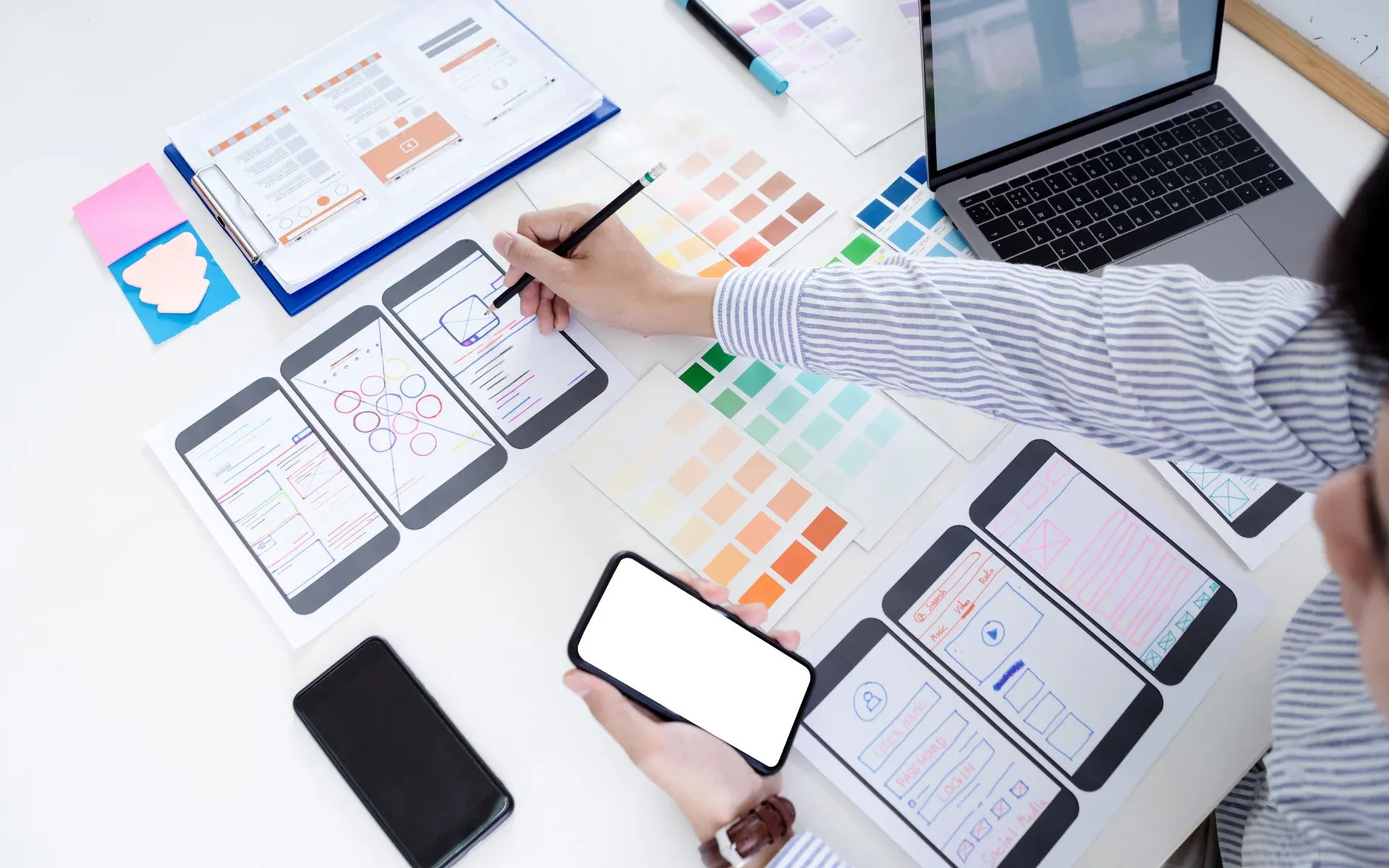
A clickable prototype looks and feels like the finished application: users tap through the screens, fill in forms and experience the workflows – just without the program logic behind them. Management, business departments and developers all see the same picture, and misunderstandings come to light before they become expensive.
The design system is its counterpart for the long haul: a collection of components, rules and guidelines from which all screens of a product are built. It ensures that the hundredth screen matches the first and that new features do not have to be designed from scratch every time.
What a clickable prototype is good for
Testing workflows with users. The quickest way to find out whether a workflow is understandable is to let future users try it. Whatever gets stuck in the test, we change in hours instead of weeks.
Backing up decisions. A prototype convinces management, business departments or investors better than any concept paper – and makes visible what is actually being decided.
A basis for a reliable estimate. What can be seen in the prototype is clearly described. This makes the scope tangible and the cost estimate for development considerably more accurate.
Starting point for the MVP. Once the idea has proven itself, it becomes the first working product – find out more under MVPs & prototypes.
Design systems: consistency that grows with you
A design system consists of components such as buttons, forms, tables and navigation with all their states, plus guidelines for spacing, typography, colours and language. What matters is that it exists not only as a design template but as components in the code. Only then do design and implementation stay in step.
A design system is particularly worthwhile when several applications need a shared look and feel, when a product is developed further over many years or when the same interface is to appear under different brands. New features are then built faster because the building blocks already exist – designed according to the principles of our UI design.
How much does a clickable prototype cost?
According to our cost model, a clickable prototype costs about €7,000–13,000, and an MVP for the first pilot customers €27,000–50,000 – both excluding VAT. The effort for a design system depends on how many applications and components it is to cover; this is best discussed directly in relation to your project.
Our guide How much does an app cost? explains which factors determine the cost of an app. You can get an initial estimate for your project with the project cost calculator.
From prototype to product
- Define goals and core workflows
- Design the clickable prototype
- Test with users and decision-makers
- Transfer components into the design system and development
- Define goals and core workflows
- Design the clickable prototype
- Test with users and decision-makers
- Transfer components into the design system and development
Frequently asked questions about prototypes and design systems
What is the difference between a prototype and an MVP?
A clickable prototype simulates an application: you can click through the screens, but no real data is processed. An MVP (minimum viable product), by contrast, is real, working software with the smallest meaningful feature set that the first customers actually use. The prototype answers the question of whether a solution is understood; the MVP, whether it holds up in everyday use.
How extensive should a prototype be?
As small as possible, as large as necessary. We focus on the core workflows that determine whether a product works, rather than fleshing out every screen. This produces a testable result quickly and keeps the effort manageable.
Can the prototype be reused later?
The designed screens and components feed directly into the final design and into development. The prototype itself, however, is not program code but a tool for testing and deciding. It is kept as a reference, while the finished application is developed anew and cleanly.
When does a design system pay off?
As soon as more than one application needs a shared look and feel, several people work on the interface or a product is developed further over many years. For a single small application, a lean component library is often enough, which can be expanded into a full design system when needed.
Can you turn an existing design into a design system?
Yes. We capture the existing screens, consolidate similar variants into consistent components and document the rules behind them. The application can then be switched over to the new components step by step – without starting from scratch.
Didn't find your question?Get in touch
We turn your product idea into a clickable prototype – and a proven design into a design system that grows with you.