


- About us
For more than 10 years, we have been helping companies successfully digitize their business processes.
About 4eBProjectsOur own products, built and run with the same technologies and quality standards as client projects.
- JustAtWorkProject management, resource planning and time tracking
- InventaryThe digital guest guide for vacation rentals
- Stundenplan-DigitalThe school timetable as a calendar subscription
- Cipher ChatEnd-to-end encrypted team chat with calls
ReferencesClients who have worked with us for many years – from apps to IT infrastructure.
- Stenger PumpenField service app connected to the ERP
- ClicClicEvent photo platform, built and run since 2015
- MomenthIT support for a health centre at three locations
Learn moreSustainabilityWith the SME Climate Commitment, we are halving our emissions by 2030 and disclose every year where we stand.

Funding for digital projects: from the application to the payout
Grants, promotional loans and tax incentives can cut the cost of software, AI and digitalisation considerably. What matters is taking the steps in the right order.
FundingDigitalisationFunding process

- Published
- Reading time
- 7 min
Every year, the German federal government, the federal states and the EU provide substantial funds to help small and medium-sized enterprises invest in software, artificial intelligence and IT security. Even so, much of this funding goes unused. The project itself is rarely the reason. Usually it is the process: the contract has already been signed, a document is missing or a programme's budget is exhausted before the application arrives.
This article shows how the funding process for a digital project typically works, from the first conversation to the payout and the close of the project. You will also learn what executives should watch out for so that the money actually arrives in the end.
The most important rule: application first, contract second
Almost all funding programmes for digitalisation follow the same principle: they only support what would not have happened, or not in the same way, without the funding. The project must therefore not have started before the application is filed. KfW, Germany's state-owned development bank, puts it unmistakably for its ERP digitalisation loan: “Apply for your promotional loan with your financing partner before you start your project.”*
The catch lies in what counts as the start. For many programmes, a signed quote or a concluded contract already counts, not the first working day of the project. Accept a quote too early and you lose the funding, even if not a single line of code has been written. Planning, meetings and non-binding quotes, on the other hand, are generally harmless. In fact, they are a prerequisite for a good application.
Grant, promotional loan or tax incentive?
Before turning to the application, it is worth looking at the three basic types of funding. Grants do not have to be repaid and usually cover a fixed share of the costs. The Digitalbonus Bayern, for example, reimburses 50 percent, up to €7,500 or €30,000 depending on the variant. Such programmes are attractive but often tightly limited: monthly quotas, lotteries as in North Rhine-Westphalia or fixed application windows are not unusual.
Promotional loans such as KfW's ERP-Förderkredit Digitalisierung or the Digitalisierungsfinanzierung of L-Bank in Baden-Württemberg finance larger projects on favourable terms. They often come with a repayment bonus that reduces the amount to be repaid. In Baden-Württemberg, the state's Digitalisierungsprämie for small and medium-sized enterprises is currently 5 percent of the loan for projects between €25,000 and €250,000. Here, the application always goes through your house bank.
The third route is the Forschungszulage, Germany's research allowance: a tax incentive with a legal entitlement and no budget cap. It only applies to genuine research and development, however, meaning projects with technical novelty and development risk, not the introduction of off-the-shelf software. Unlike most programmes, it can also be claimed during or after the project.
Before the application: define the project, prepare the documents
It all starts with a clear description of the project. Which problem is to be solved, what does the process look like today and what will it look like afterwards? Funding bodies want to understand the current and the target state and see which step in digitalisation or innovation the company is taking. Add to this a concrete quote and a cost breakdown that separates eligible from ineligible items.
A free, vendor-neutral initial consultation can help, for example at the Mittelstand-Digital centres or, in Baden-Württemberg, at the regional Digital Hubs. For some programmes, a preliminary step is even mandatory. For KfW's basic digitalisation level, for instance, companies must, according to KfW, “first carry out the Digitalisation Check”*. It also matters who files the application: it is always the company itself, not the service provider. Some programmes explicitly rule out applications by third parties.
From the application to the project start
For grants, the application goes directly to the funding body, often through an online portal. Depending on the programme, the project may start once receipt has been confirmed or only after the formal funding decision, as with the innovation vouchers in Baden-Württemberg. For promotional loans, the house bank first reviews the project and forwards the application to the development bank. As with any loan, it will ask for the usual collateral. Only once the required confirmation is in hand should the contract be awarded. The validity of the quote and the project start should therefore match the programme's timetable from the outset.

Implementation, proof and payout
During implementation, the approved scope applies. Many programmes set an implementation period, often twelve months. Agree any significant changes to the scope with the funding body in advance. Invoices should be clearly assignable to the items in the application, and proof of payment belongs in a dedicated project file from day one.
That is because the money is usually only paid out once the project has been implemented and documented. L-Bank states for its Digitalisierungsfinanzierung: “After successful completion of your investments, you will additionally receive a repayment bonus.”* For KfW's ERP grant, companies can request the payout through their house bank “once your loan has been fully disbursed”*. For grants, completion of the project is followed by the proof of use, with a project report, invoices and payment receipts. Only then does the money flow. You therefore need to plan liquidity for the duration of the project. A funded project is only closed once the proof of use has been reviewed. Keep all records for possible later audits.
Practical tips for your funded project
Plan the funding as early as the project itself. Programmes with quotas reward good preparation: for the Digitalbonus Bayern it pays to apply at the start of the month, and in Saxony-Anhalt the next application window closes after a fixed number of applications. Also keep an eye on the de minimis ceiling. Many grants are de minimis aid, and under EU Regulation 2023/2831 a company may receive no more than €300,000 of it over three years. The period is rolling, and all such aid counts towards the limit.
In addition, the same costs may generally not be funded twice. A promotional loan can sometimes be combined with other programmes, but clarify this in advance with the funding body or your house bank. Watch out for exclusions, too: off-the-shelf software, pure marketing websites or maintenance contracts are not eligible under many programmes. On the other hand, the service provider usually does not have to be based in your own federal state. And finally, funding programmes change frequently. The federal go-digital programme ended in 2024, and Baden-Württemberg's Digitalisierungsprämie Plus in June 2025. Always check the current guidelines before you plan.
Conclusion: funding is project management
Funding for digitalisation does not happen by itself, but it is no bureaucratic obstacle either. If you align the project, quote and timetable with the right programme, you can noticeably reduce the cost of software, AI or IT security. This alignment belongs at the beginning of a project, not at the end.
This is exactly where we at 4eBusiness GmbH support you. On our Funding options page, you will find the programmes currently open at federal, state and EU level, filtered by our services, from software and app development through AI and automation to operations and IT security. Together, we clarify the goal, scope and cost of your project and provide you with the quote, project description and cost breakdown for your application. We align the project start and invoices with the requirements of your programme so that the proof of use goes smoothly. If no funding programme fits, leasing, hire purchase and loans offer an alternative.
Sources
- KfW: ERP-Förderkredit Digitalisierung (511/512), accessed October 20, 2026 (in German)
- L-Bank: Digitalisierungsfinanzierung, accessed October 20, 2026 (in German)
- Bavarian State Ministry of Economic Affairs, Regional Development and Energy: Digitalbonus Bayern, accessed October 20, 2026 (in German)
- Bescheinigungsstelle Forschungszulage: Forschungszulage, accessed October 20, 2026 (in German)
- European Commission: Regulation (EU) 2023/2831 on de minimis aid, December 13, 2023
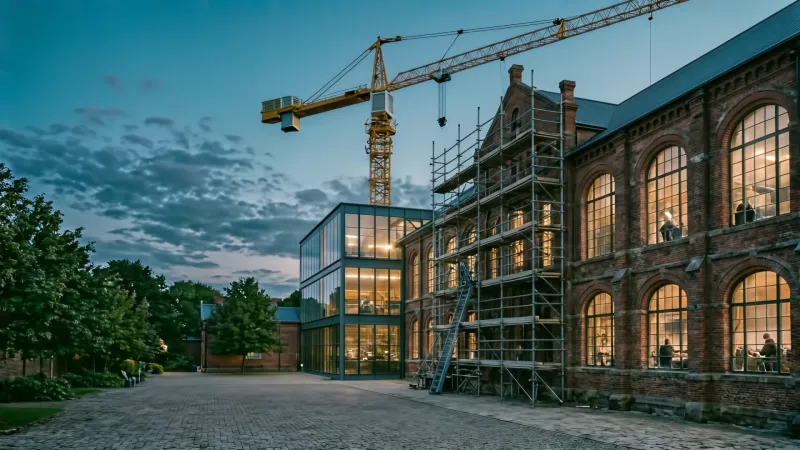
* Our translation of a quote from a German-language source. This article is for guidance only and does not constitute funding or legal advice; the funding bodies' guidelines are binding. The images in this article are AI-generated.
We'll work with you to define scope and cost and provide the documents for your funding application – free of charge and without obligation.